
If you’ve searched for website development prices, you already know the answer is almost never a straight number. You get “it depends” from every direction. And that answer isn’t wrong. But it’s also not helpful.
So let’s skip the vague answers. Whether you’re a small business owner, a startup founder, or someone who just wants to get online, here’s what the custom website cost looks like in the US in 2026.
Looking to get a project scoped properly? The team at Devspire works as a full-service Custom Web Development Company that can tell you exactly what your build will take, without the guesswork.
Why Website Costs Are All Over the Place
A website is not a product with a price tag. It’s a service. And like any service, the cost depends on what you need, who does the work, and how complex the build is.
Think of it like building a house. A one-bedroom cabin costs far less than a five-bedroom home with custom finishes. Same idea here.
The three biggest factors that affect the price:
- What type of website you need
- Who builds it (freelancer, small agency, or a full team)
- What features and pages you want
Basic Website Cost: Small Business or Portfolio Sites
A basic website with 5 to 10 pages, a contact form, and a clean design is what most people start with. These are usually for service businesses, consultants, or personal brands.
In the US, these typically run between $2,000 and $8,000 when built by a professional. If you go with a DIY page builder like Wix or Squarespace, you can spend as little as $200 a year. But you’re doing all the work yourself and the design ceiling is low.
If you want something that looks good, loads fast, and actually ranks on Google, the $3,000 to $6,000 range is a realistic starting point for custom website cost at the basic level.
WordPress Website Price in the US
WordPress powers close to 43% of all websites on the internet right now. It’s popular because it’s flexible, relatively affordable, and a massive pool of developers know how to work with it.
The WordPress website price in the US depends on whether you’re using a pre-made theme, customizing one, or building from scratch.
Here’s a rough breakdown:
- Basic WordPress site with a theme: $1,500 to $5,000
- Custom WordPress theme: $5,000 to $15,000
- Full custom WordPress build with advanced features: $15,000 and up
One thing people consistently underestimate is speed and SEO. A poorly optimized WordPress site will rank low and frustrate users. If you’re investing in a build, budget for optimization from day one, not as an afterthought six months later.
Ecommerce Website Development Cost
Ecommerce is a different animal. Selling products online means you need a shopping cart, payment gateways, inventory management, product pages, and security layers. All of that costs more.
Ecommerce website development prices in the US generally fall into three ranges:
- Small store (under 50 products): $5,000 to $20,000
- Mid-size store: $20,000 to $60,000
- Large catalog or custom platform: $60,000 and up
The platform you choose matters too. WooCommerce (built on WordPress) is one of the most common choices because it’s flexible and cost-effective. If you need something tailored to your exact catalog, shipping rules, and checkout flow, working with a focused ecommerce development team makes a real difference.
Cheap ecommerce builds almost always create expensive problems later, whether that’s slow load times, broken checkouts, or security gaps.
Custom Web Applications: The High-End Range
If you need user logins, dashboards, APIs, or anything beyond a standard website, you’re in custom web application territory. Budgets here start at $25,000 and can reach $200,000 or more depending on complexity.
These projects need experienced developers, solid design work, and someone to keep the scope and timeline in check. For large builds, companies often look at dedicated development teams instead of fixed-price contracts. It gives them more control as requirements change mid-project.
The Hidden Costs People Always Forget
Your website doesn’t end at launch. Here’s what gets left out of most quotes:
- Domain name: $10 to $20 per year
- Hosting: $100 to $500 per year for basic; much more for high-traffic sites
- SSL certificate: Sometimes included, sometimes not
- Ongoing maintenance: $500 to $2,000 per year
- SEO and marketing: An ongoing investment, not a one-time fee
This last one catches a lot of people off guard. A well-built site still needs traffic. If organic search is part of your plan, digital marketing and SEO work needs to start alongside the build, not after it.
Freelancer vs. Agency: What’s the Real Difference?
A freelancer might quote $1,500 for a website that an agency would price at $8,000. So why pay more?
Honestly, for simple projects with a clear scope, a freelancer is often fine. But if your project has multiple pages, custom features, tight deadlines, or ongoing support needs, a team is usually the better call. Agencies bring designers, developers, and project managers together, so fewer things fall through the cracks.
So, What Should You Actually Budget?
Here’s the short version:
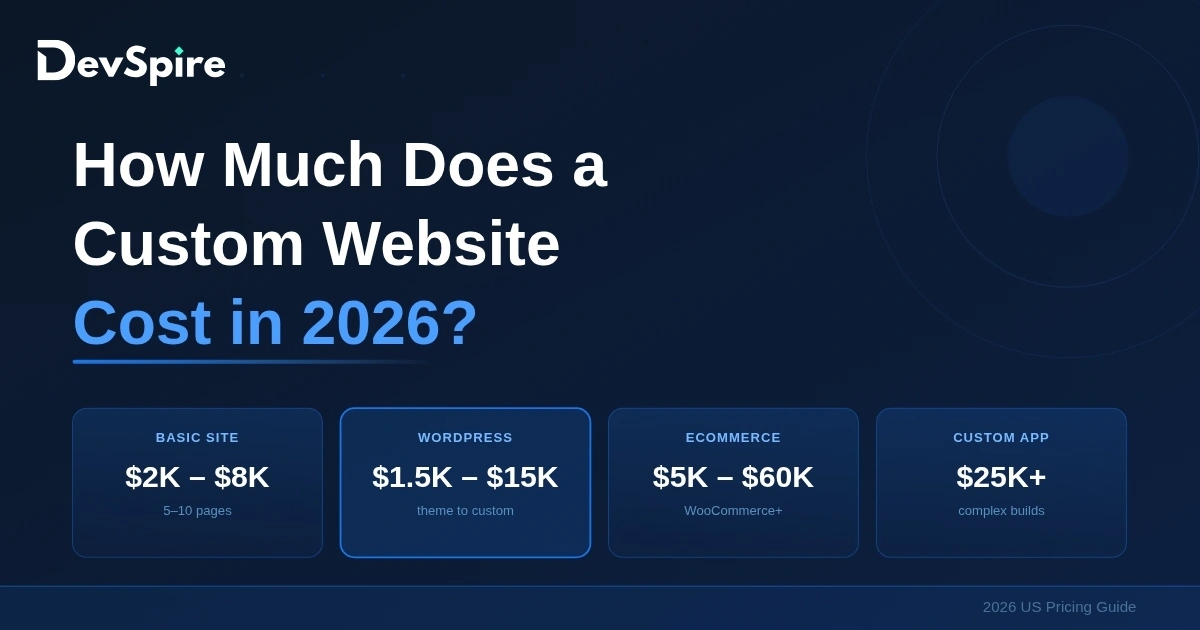
| Website Type | Typical US Cost |
| Basic small business site | $2,000 to $8,000 |
| WordPress website | $1,500 to $15,000 |
| Ecommerce (small to mid) | $5,000 to $60,000 |
| Custom web application | $25,000 and up |
No two projects are the same and these numbers are ranges, not guarantees. But they give you a real starting point for conversations with developers or agencies.
Final Thoughts
There’s no universal custom website cost, and anyone who gives you a number without asking questions first is probably guessing. What you actually need to figure out is the scope, the platform, and whether you’re building for today or for three years from now.
A $3,000 WordPress site might be exactly right for a local service business. A $50,000 ecommerce build might be exactly right for a growing product brand. Neither is wasteful if it fits the goal.
The mistake most people make is either underspending on something business-critical or overspending on features they don’t actually need yet. Both hurt.
If you’re not sure where your project falls, it’s worth having a real conversation with a development team before you commit to anything. Get the scope defined, understand what’s included, and ask about what happens after launch.
That’s where the long-term value either gets built or gets lost.