
You have a budget. You have a deadline. And you have two developers giving you opposite advice about whether to build a native app or a hybrid app. It’s a common spot for business owners to be in, and the wrong choice can cost you months of rework and thousands of dollars.
At devspire llc, we build both native and hybrid apps for clients across the US, so this isn’t a theory piece. It’s what we tell clients in the first meeting, before any code gets written. This guide breaks down the real differences in plain language, so you can make the call with confidence.
What Do “Native” and “Hybrid” Actually Mean?
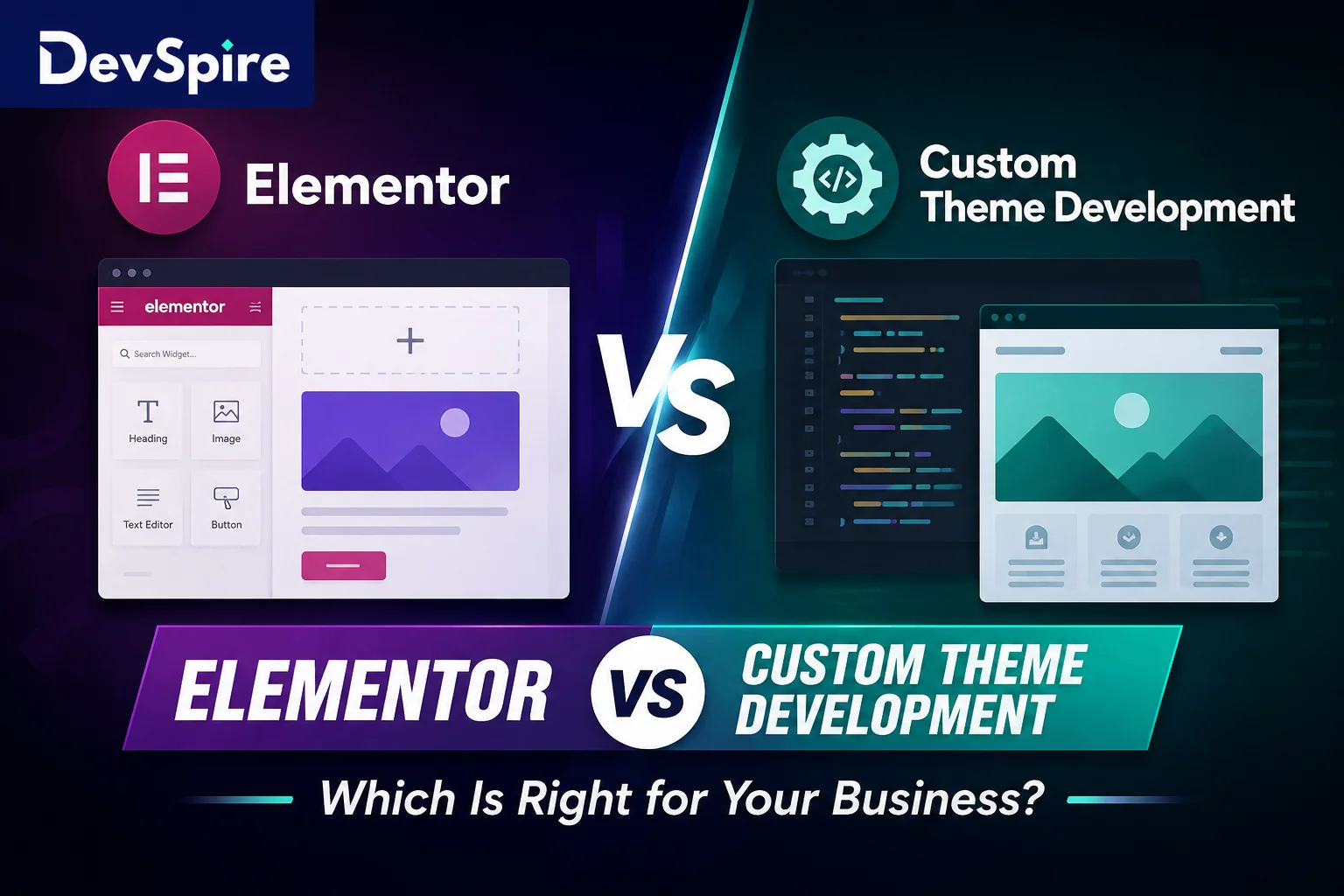
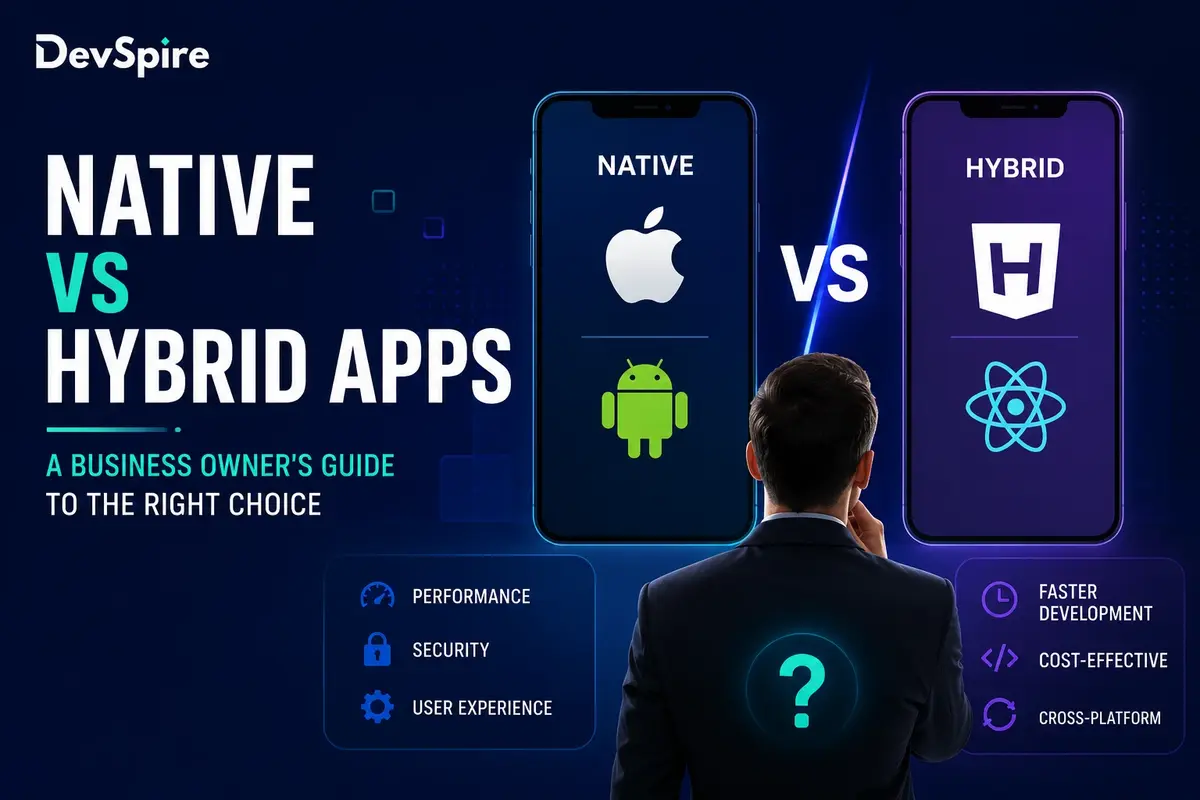
A native app is built separately for each platform. iOS apps are written in Swift, Android apps are written in Kotlin. Two different codebases, two different teams (or the same team working twice), two apps that behave exactly the way users expect on each device.
A hybrid app is built once, using a shared codebase, with tools like Flutter or React Native. That single codebase gets packaged to run on both iOS and Android. You write the code once and it works on both.
Neither option is better on its own. Which one fits your business depends on your budget, your timeline, and what your app actually needs to do.
Which One Costs Less to Build?
Hybrid apps are usually cheaper to build first. Since there’s one codebase instead of two, you’re paying for one build, not two separate ones. For a small business testing a new app idea, that difference in cost can be the deciding factor.
Native apps often cost less to maintain in year one, but that flips over time. Two codebases mean two sets of updates every time you add a feature or fix a bug. If you’re planning to update your app often, that adds up fast. Businesses with WordPress sites that need SEO support alongside their app often start with our wordpress seo optimization service to make sure the website side of the business is pulling its weight while the app gets built.
There’s also a hidden cost most business owners don’t think about until later: hiring. Native development needs developers who know Swift and Kotlin, which usually means two specialists instead of one team working across both platforms. That’s a real cost difference on a small business budget, and it’s worth asking any development partner for a clear breakdown before you sign anything.
Speed and User Experience
Native apps run faster and feel smoother. They connect directly to phone hardware like the camera, GPS, and fingerprint sensors, so there’s no extra layer slowing things down. If your app depends on speed, like a game or a navigation tool, native usually wins.
Hybrid apps have closed a lot of that gap in the last few years. Flutter and React Native are much faster than they used to be, and for most business apps, like a booking app, a loyalty app, or a simple e-commerce app, most users won’t notice a difference. The gap only really shows up in graphics-heavy apps or apps that lean hard on device hardware.
If you already have a mobile-friendly business and you’re deciding whether to build from scratch, our mobile app development service team can walk you through which approach fits your specific use case, based on what your app needs to do day to day.
How Long Does Each One Take to Build?
Hybrid apps usually launch faster since there’s one codebase covering both platforms at once. If speed to market matters more than anything else, hybrid has the edge.
Native apps take longer because two versions are being built side by side, even if it’s the same team. For businesses on a tight launch date, that extra time needs to be part of the planning from day one, not something you find out about halfway through the project.
Timeline also depends on how big the project is. A simple app with just a few screens can move fast either way. An app with logins, payments, push notifications, and an admin dashboard will take longer no matter which route you pick. Those features need real testing on both platforms.
Business owners often forget this part: the build is only half the timeline. Testing, App Store review, and fixing bugs that real users find all add more weeks. A good launch plan leaves room for that, instead of assuming the app is done the day the code is finished.
If you’re starting from a WordPress website and thinking about turning it into an app instead of building one from the ground up, it’s worth reading our breakdown on turning wordpress site into mobile app before you decide. It can be a faster and cheaper path for some businesses, depending on what your website already does.
When Native Makes Sense
Native is usually the better call when:
- Your app uses a lot of phone hardware, like AR, advanced camera features, or Bluetooth devices
- You’re building a game or anything where smooth graphics are the main selling point
- You’re a larger company with a long-term budget and plan to keep investing in the app for years
- User experience and speed are core to what makes your app valuable
When Hybrid Makes Sense
Hybrid is usually the better call when:
- You’re testing a new business idea and need to launch fast without a big budget
- You’re a startup or small business building your first app
- Your app is mostly content, forms, or simple features like bookings and orders
- You need to be on both the App Store and Google Play at the same time, without doubling your budget
Questions to Ask Before You Decide
Before you commit to either path, sit down with these questions:
- What’s the budget for this year, and what’s realistic for next year?
- Does the app need deep access to phone hardware, or is it mostly content and forms?
- Is getting to market fast more important than having the smoothest possible experience?
- Do you have an in-house dev team, or are you hiring a development partner?
There’s no universal right answer here. The answer depends on your business, not on which technology is more popular this year.
The Bottom Line
Native and hybrid apps both work well, they’re just built for different situations. If your app depends on speed, graphics, or deep hardware access, native is worth the extra cost and time. If you’re testing an idea, working with a tighter budget, or need to launch fast on both platforms, hybrid gets you there without the extra spend.
The right choice comes down to your budget, your timeline, and what your app actually needs to do, not which option sounds more advanced.