Choosing a mobile app development partner can shape your product for years. A poor fit can mean missed deadlines, fragile code, and expensive rework after launch. This guide compares ten companies serving US businesses, shows what each is best suited for, and explains how to evaluate them. DevSpire is included as our own studio, and we state that clearly rather than presenting this as a fully independent ranking.
People searching for the best mobile apps development company often expect one universal winner. There is not one. The right choice depends on product stage, technical complexity, budget, industry, and whether you need strategy, design, engineering, or ongoing support. A startup validating an MVP should not assess agencies the same way as an enterprise connecting a mobile product to existing systems.
Top 10 Mobile App Development Companies: Quick Comparison
| Company | Best For | Core Strength | Suitable For |
|---|---|---|---|
| DevSpire | Startups and SMBs | Full-cycle mobile product delivery | Startups, SMBs |
| TELUS Digital (formerly WillowTree) | Consumer brands and complex digital products | Product strategy, design, engineering | Mid-market, enterprise |
| ArcTouch | Connected products and platform-focused apps | Native and connected-device engineering | Growth-stage, enterprise |
| Zco Corporation | Long-term custom app programs | Broad mobile engineering capability | SMB, enterprise |
| Cheesecake Labs | Design-led product teams | Product strategy, UX, engineering | Startups, mid-market |
| Chop Dawg | Founders building new digital products | Strategy-led app development | Startups, organizations |
| Intellectsoft | Enterprise integrations | Mobile engineering and systems integration | Mid-market, enterprise |
| ScienceSoft | Complex and regulated-sector apps | Cross-platform and industry-focused delivery | Mid-market, enterprise |
| Deloitte Digital | Large transformation programs | Strategy, design, product, engineering | Enterprise |
| Designli | Founders needing a dedicated product team | Product strategy, UX, ongoing development | Startups, SMBs |
How We Evaluated These Companies
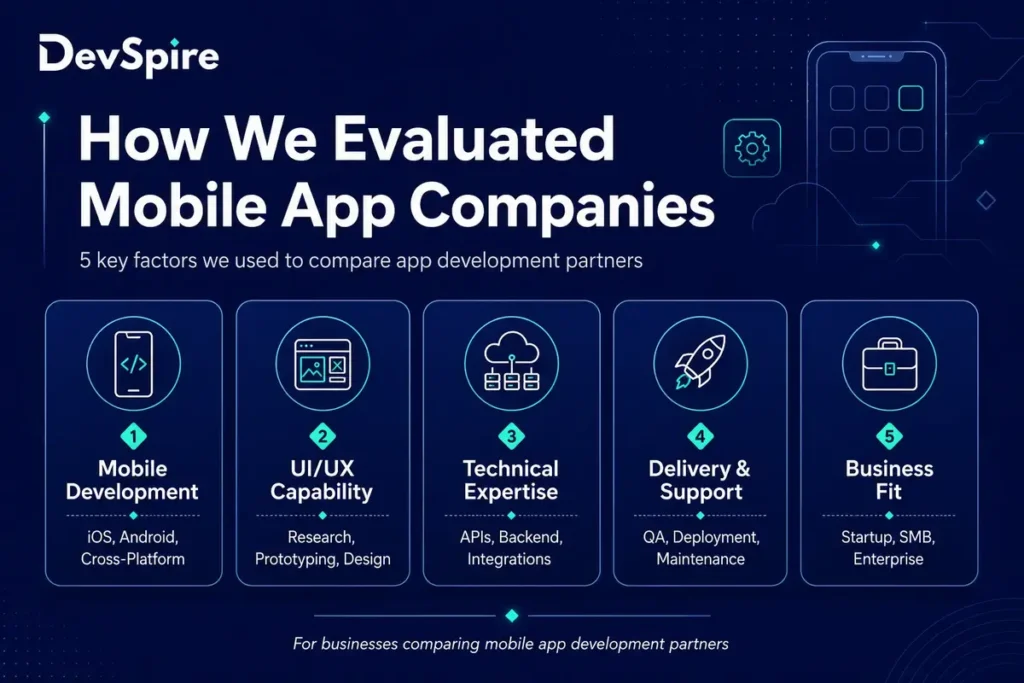
We reviewed public service information, case studies, mobile capabilities, design depth, delivery models, and the types of clients each company says it serves. For example, mobile app development services from DevSpire combine planning, UX/UI, development, API integration, testing, deployment, and post-launch support in one engagement. We also looked beyond coding. Discovery, UX, architecture, QA, deployment, ownership, and maintenance all affect whether an app remains useful after launch.
A buyer should ask, “Does this company’s normal way of working fit our project?” Define your users, essential features, target platforms, integrations, launch goals, and ownership expectations before comparing proposals.
The Top 10 Mobile App Development Companies
1. DevSpire
Best for: Startups and SMBs that want one team from planning through launch.
DevSpire works across mobile product planning, UX/UI, development, API integration, QA, deployment, and ongoing support. The fit is strongest for founders and product leads who do not want to coordinate separate design and engineering vendors. Businesses past the idea stage can use the same team to turn requirements into a working iOS, Android, or cross-platform product. DevSpire’s current site positions the company around web and mobile development, SaaS/MVP work, UX/UI, and dedicated development resources.
For smaller organizations, responsiveness and ownership can matter more than agency size. The best app developers should explain tradeoffs clearly, challenge weak requirements, and show how the product will be maintained after release. A practical way to compare those qualities with a consistent buyer framework is to review how to choose a mobile app development agency before you start vendor calls.
2. TELUS Digital (formerly WillowTree)
Best for: Established brands building or expanding customer-facing digital products.
WillowTree’s digital product capabilities now sit within TELUS Digital, where web and mobile development, experience design, and product strategy are part of a broader offering. That makes TELUS Digital relevant when a mobile app connects to a wider customer ecosystem, such as commerce, content, loyalty, identity, or existing enterprise services. TELUS Digital officially confirms that WillowTree is now part of TELUS Digital and lists mobile development, experience design, and product strategy among the combined capabilities.
Brand recognition should not replace due diligence. Ask which team would actually work on your account, what similar products it has delivered, and how design and engineering decisions are made.
3. ArcTouch
Best for: Connected products, media experiences, and apps that depend on platform-specific features.
ArcTouch’s services include mobile app design and development, connected-product work, cloud services, and UX. It is worth considering when a product depends on smart devices, Bluetooth, hardware, media, or deeper use of native platform capabilities. Its current connected-product offering covers mobile apps, firmware integration, cloud backends, UX, and device communication technologies.
For these projects, ask for examples that match the technical challenge, not only the industry.
4. Zco Corporation
Best for: Organizations that want broad mobile capability and long-term support.
Zco develops native and cross-platform mobile apps and also offers enterprise software services and post-launch support. Its current mobile stack includes technologies such as Swift, Kotlin, React Native, and Flutter, alongside API, hardware, and enterprise integration work.
The benefit of a broad engineering partner is continuity, but buyers should still confirm who will be assigned, how senior technical decisions are handled, and how design quality is evaluated. Strong UI/UX design services should connect research, user flows, prototypes, accessibility, and interface choices to real product goals rather than treating design as decoration.
5. Cheesecake Labs
Best for: Teams that want product strategy, UX, and engineering in the same engagement.
Cheesecake Labs combines product strategy, design, and software engineering across mobile and other digital products. Its current services span product strategy, design and UX, engineering, cloud, and related product-development capabilities.
That is useful when the user journey still needs refinement before a large build begins. For startups, an integrated product process can reduce the gap between what the business expects and what engineering ultimately ships.
6. Chop Dawg
Best for: Founders and organizations that need strategic guidance alongside development.
Chop Dawg positions itself as a long-term app development partner rather than a coding-only vendor. Its offering spans strategy, design, engineering, and continued product support, with a history of working with startups as well as larger organizations.
That can suit first-time founders who need help converting an idea into a buildable roadmap, as well as organizations that want continuity after launch.
Before signing, clarify communication cadence, scope ownership, change requests, deliverables, and post-launch responsibilities. The best mobile app developers make these operating details clear before development starts.
7. Intellectsoft
Best for: Enterprise mobile apps that must connect with existing business systems.
Intellectsoft offers full-cycle mobile development and enterprise integration work, including connections with ERP, CRM, cloud services, and other systems. Its current service offering covers product discovery, UX/UI, native and cross-platform development, testing, deployment, and maintenance.
This makes it relevant when the app is one layer of a larger technology environment rather than an isolated consumer product.
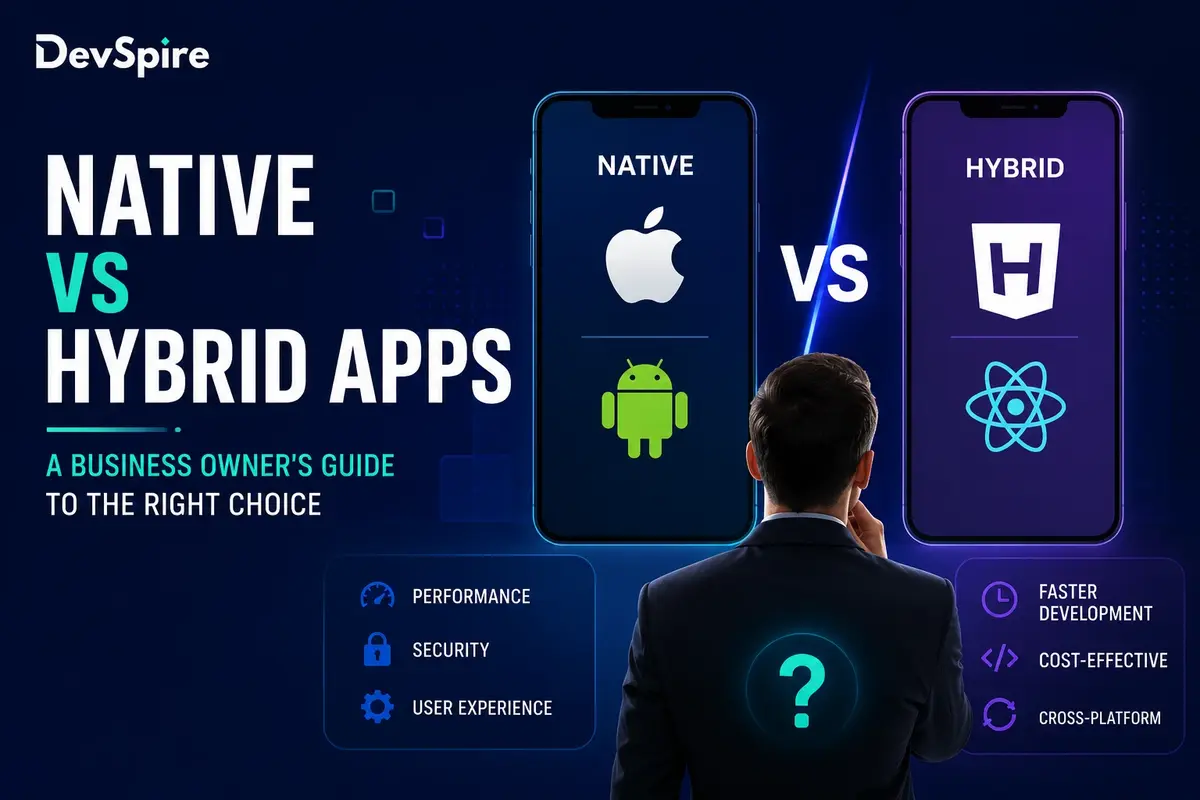
Architecture choices matter more in that setting. Understanding native vs hybrid app development before vendor discussions helps buyers evaluate recommendations around native iOS, Android, React Native, Flutter, or other cross-platform approaches.
8. ScienceSoft
Best for: Businesses with complex mobile requirements, including healthcare and finance.
ScienceSoft offers native and cross-platform mobile development and highlights work across healthcare, finance, ecommerce, field service, and other sectors. Its published mobile capabilities include iOS, Android, React Native, Flutter, and other development approaches.
Industry familiarity can help discovery, but it should not be treated as automatic proof of compliance. Ask which standards apply to your product, how security testing is handled, and what documentation will be delivered.
9. Deloitte Digital
Best for: Large enterprises combining product work with broader transformation.
Deloitte Digital brings business strategy, design, product management, data, and engineering into digital product programs across web, mobile, and other experiences. Its US digital-product practice explicitly combines strategy, design, product management, analytics, and engineering capabilities.
It is most relevant when an app is tied to a wider program involving customer experience, internal systems, several business units, or organizational change.
For a narrow MVP, a smaller product studio may be easier to engage. For a complex enterprise initiative, coordination and governance can matter as much as development speed.
10. Designli
Best for: Founders and growing product teams that want a dedicated team model.
Designli’s mobile development offering emphasizes dedicated product teams that combine engineering, product ownership, and UX/UI. Its current model describes full-time product teams designed to stay focused on one client product rather than rotating between unrelated projects.
This suits founders who want a consistent group to learn the product over time instead of rotating resources.
A dedicated model can also help an internal team add capacity while keeping product ownership close. DevSpire’s dedicated development teams are another option for businesses that prefer embedded talent over a traditional fixed-scope vendor relationship.
How to Choose the Best Mobile App Development Company
Start with relevant experience, not logo recognition. Ask each company to show products with similar technical complexity. If your app needs real-time sync, offline use, payments, healthcare data, hardware integration, or a complex admin platform, the vendor should be able to explain comparable work.
Next, evaluate discovery. A strong partner asks who the user is, what problem the app solves, what belongs in version one, and what can wait. That discipline keeps MVPs focused and reduces costly changes later.
Technical due diligence should cover native versus cross-platform architecture, backend ownership, APIs, authentication, data storage, analytics, QA, release processes, and scalability. Also confirm source-code and IP ownership, third-party costs, documentation, and handover terms.
Finally, look beyond launch. Mobile products need OS updates, dependency upgrades, bug fixes, security patches, and feature improvements. A cheap build can become expensive if the app is difficult to maintain.
Which Type of App Development Partner Is Right for Your Business?
Startups and MVP teams should prioritize speed, product thinking, flexible scope, and a team comfortable learning from early users. The best mobile application development company for an MVP is usually the one that helps you avoid building too much before the idea is validated.
SMBs often need tighter cost control, clear milestones, and a partner that can manage business requirements as well as technical delivery. A full-cycle studio or dedicated team can work well without a large in-house engineering department.
Enterprises should focus on integration, security, governance, stakeholder coordination, scalability, and long-term support. The best enterprise mobile app development company is not automatically the biggest vendor; it is the one whose process fits your architecture and approval environment.
Final Thoughts
The top mobile app developers are not interchangeable. DevSpire, TELUS Digital, ArcTouch, Zco, Cheesecake Labs, Chop Dawg, Intellectsoft, ScienceSoft, Deloitte Digital, and Designli serve different project types and buyer needs.
Use this list to build a shortlist, then speak with at least three companies. Compare how they define scope, challenge assumptions, explain architecture, handle ownership, and support the product after launch.