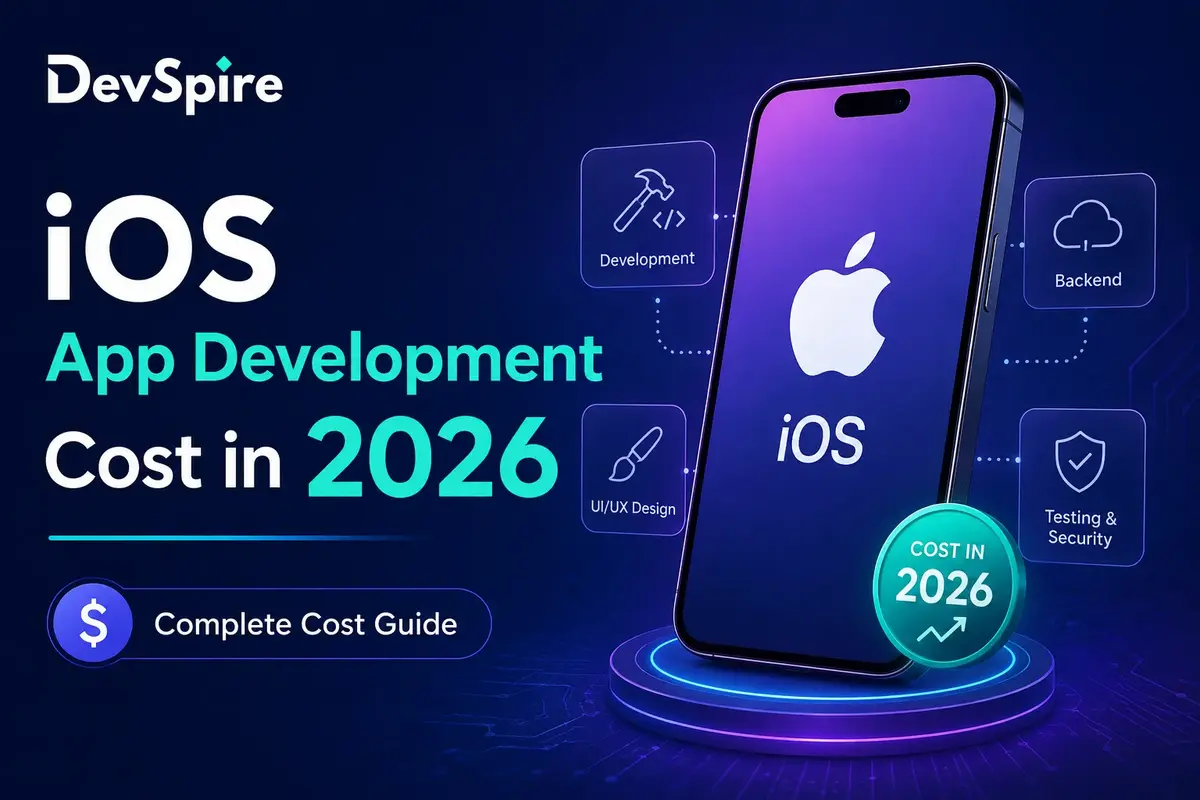

A simple app can cost $15,000. A complex one can cost $250,000 or more. That gap is the whole problem with searching “app development cost.” There’s no single number, only a range that depends on who builds it, how big it is, and what it needs to do.
This guide breaks that range down into real numbers, so you can figure out what your app will actually cost before you talk to anyone. If you’d rather skip the math and get a quote built around your project, our team at Devspire puts one together for free.
Here’s what actually moves the price, and where most people get surprised.
What Drives App Development Cost Up or Down
Before comparing prices, it helps to know what’s inside them. A few factors do most of the work:
- App complexity. A simple utility app costs far less than one with live chat, payments, or user accounts.
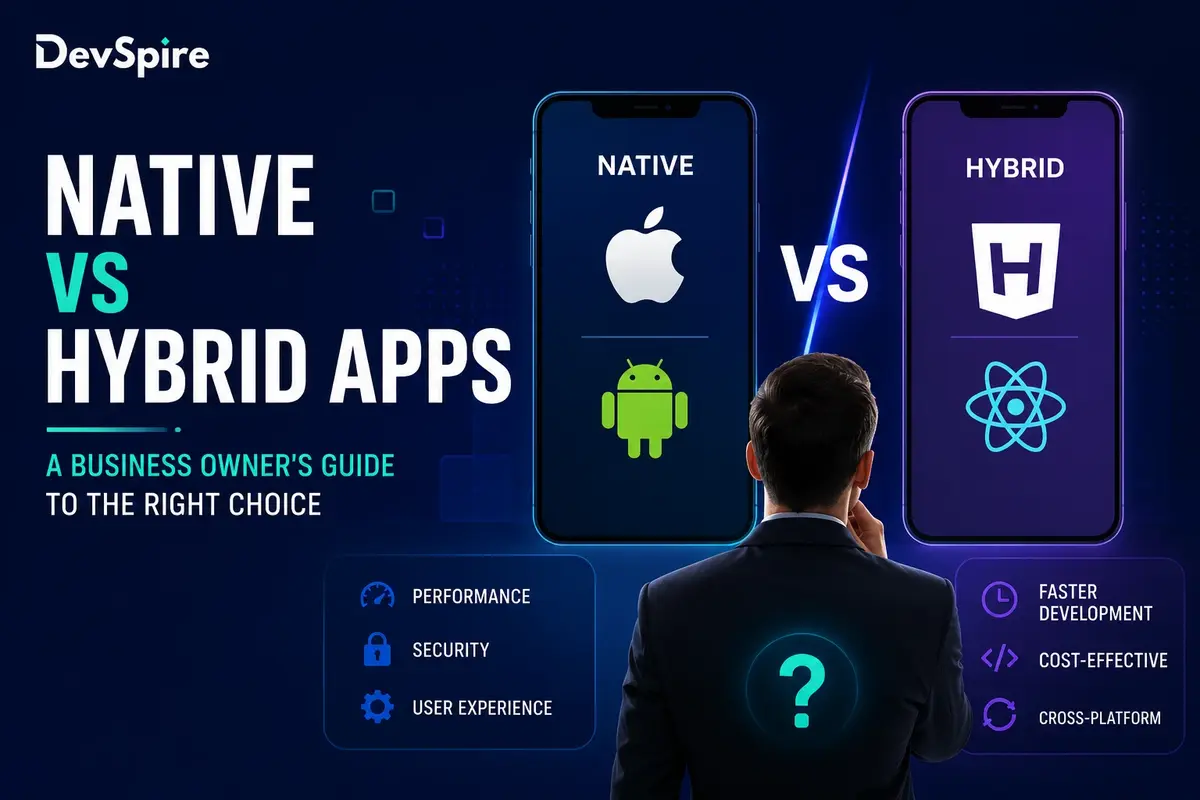
- Platform. Building for iPhone and Android both, instead of just one, adds time and cost. Some teams build once and adapt it for both. Others build native apps for each platform, which costs more but often performs better. If you’re deciding between a native app and one built with shared code across platforms, our guide on native vs. hybrid apps walks through which one fits different business needs.
- Design. A custom UI costs more than a template-based layout, but it usually performs better and feels less generic to users.
- Integrations. Payment systems, maps, login through Google or Apple, and other third-party tools each add development time.
- Maintenance. This one gets missed the most. Apps need updates after launch, and that cost keeps going even after the app is live.
None of these factors work alone. A simple app with a payment system can cost more than a complex app without one. That’s why two “simple app” quotes can land $20,000 apart.
App Development Cost by Team Type
This is the part most guides skip, and it’s the part that actually changes your budget the most. Who builds your app matters as much as what you’re building.
Freelance Developers
Cost range: $5,000 to $50,000
Freelancers work well for small, well-defined apps. You get lower rates and direct communication with the person doing the work. The tradeoff is that one person is doing everything: design, code, testing, and fixes. If they get busy, sick, or move on to another project, your timeline slips. There’s also no built-in quality check on the code before it ships.
Development Agencies
Cost range: $25,000 to $150,000 or more
An agency gives you a full team: developers, designers, project managers, and testers, all working together. This costs more upfront, but you get accountability and a process built around delivering finished software, not just code. For businesses that need the app to actually launch on schedule and keep working after that, this is usually the safer bet. Our mobile app development team works this way, with one point of contact managing the whole build from planning through launch.
In-House Team
Cost range: $80,000 or more per year, per developer
Hiring your own developers makes sense once you’re planning to keep building and updating the app for years, not just launch it once. The costs go beyond salary: benefits, equipment, management time, and the weeks it takes to hire good people. It’s the most expensive option to start, but for companies with a long product roadmap, it can pay off over time.
No-Code Platforms
Cost range: $0 to $10,000
No-code tools let you build a basic app fast and cheap, which makes them a good fit for testing an idea before committing real money. The catch is that they hit a ceiling. Once you need custom features or the app needs to scale, most no-code platforms can’t keep up, and you end up rebuilding from scratch anyway.
Quick Comparison
| Team Type | Typical Cost | Best For |
|---|---|---|
| Freelancer | $5K – $50K | Simple apps, small budgets |
| Agency | $25K – $150K+ | Apps that need to launch reliably |
| In-house team | $80K+ a year | Long-term products, ongoing builds |
| No-code | $0 – $10K | Testing an idea before investing |
Not sure which option fits your project? Our guide on how to choose a mobile app development agency covers the questions worth asking before you sign a contract, whether you’re comparing agencies or trying to decide if an agency is even the right call.
Average App Development Cost by App Type
Team type sets the range. App type narrows it down. Here’s roughly what different kinds of apps cost to build, regardless of who’s building them.
- Simple app (a calculator, a basic tracker, a single-purpose tool): $10,000 to $40,000
- Mid-size app (social features, a marketplace, user accounts and messaging): $40,000 to $100,000
- Complex app (banking features, healthcare data, live tracking, or heavy backend work): $100,000 to $300,000 or more
If your idea doesn’t fit neatly into one of these, that’s normal. Most real projects sit somewhere between two categories, which is exactly why a written scope document matters more than a single quoted number.
Does Where You Hire Change the Price?
Yes, and this is one of the biggest cost swings people miss. Two developers with the same skill level can charge very different rates depending on where they’re based.
- United States and Canada: $100 to $200+ per hour. Higher cost, but usually easier communication and closer time zones.
- Western Europe: $60 to $130 per hour. Strong quality, moderate time zone overlap with US clients.
- Eastern Europe: $30 to $70 per hour. A common middle ground: solid technical skill at a lower rate than the US.
- South Asia: $15 to $40 per hour. The lowest rates, but quality varies more, so vetting matters more here than anywhere else.
Rate alone doesn’t tell the full story. A $25/hour developer who needs twice as many hours to finish the same feature isn’t actually cheaper. When you’re comparing quotes across regions, ask for a total project estimate, not just an hourly number.
Costs People Forget to Plan For
Every founder budgets for the build. Fewer budget for what comes after.
- App store fees. Apple and Google both charge fees, and Apple requires an annual developer account fee just to keep your app listed.
- Maintenance and updates. Expect to spend 15% to 20% of your original build cost each year on fixes, updates, and compatibility with new phone software.
- Third-party tool fees. Payment processors, map services, and messaging APIs often charge based on usage, so this cost grows as your app does.
- Marketing. A finished app doesn’t get downloads on its own. Budget for App Store Optimization and some paid promotion at launch.
Most first-time app owners get surprised by the maintenance line, not the build cost. It’s easy to budget for the thing you can see. It’s harder to budget for the thing that shows up six months after launch.
If ongoing maintenance and slow feature updates sound like a headache you’d rather hand off, some businesses skip hiring in-house altogether and work with a dedicated team instead. It works like having in-house developers, minus the recruiting, payroll, and turnover risk.
How to Get a Fair Quote
- Write down exactly what the app needs to do before asking for pricing. Vague requests get vague, inflated quotes.
- Ask for a price broken down by feature, not one lump sum. This makes it easier to see where the money is going.
- Ask to see apps the team has actually built and shipped, not just design mockups.
- Get “maintenance” and “support” defined in writing. Ask exactly what’s included and what costs extra.
A written scope also protects you if the project changes halfway through, which happens more often than not. Without it, “just one more feature” requests tend to pile up, and so does the final bill.
A Quick Word on Quality vs. Price
The cheapest quote isn’t always the cheapest option in the end. A poorly built app often needs to be rebuilt within a year or two, which means paying for the same work twice. We’ve seen this happen with businesses that came to us after a low-cost build fell apart under real user traffic. The fix usually costs more than building it right the first time would have.
That doesn’t mean the most expensive option is automatically the best one either. The goal is matching your budget to a team that has actually shipped apps like yours before, and can show you proof of it.
Have a project in mind? Get in touch and we’ll help you scope it out before you spend a dollar on development.