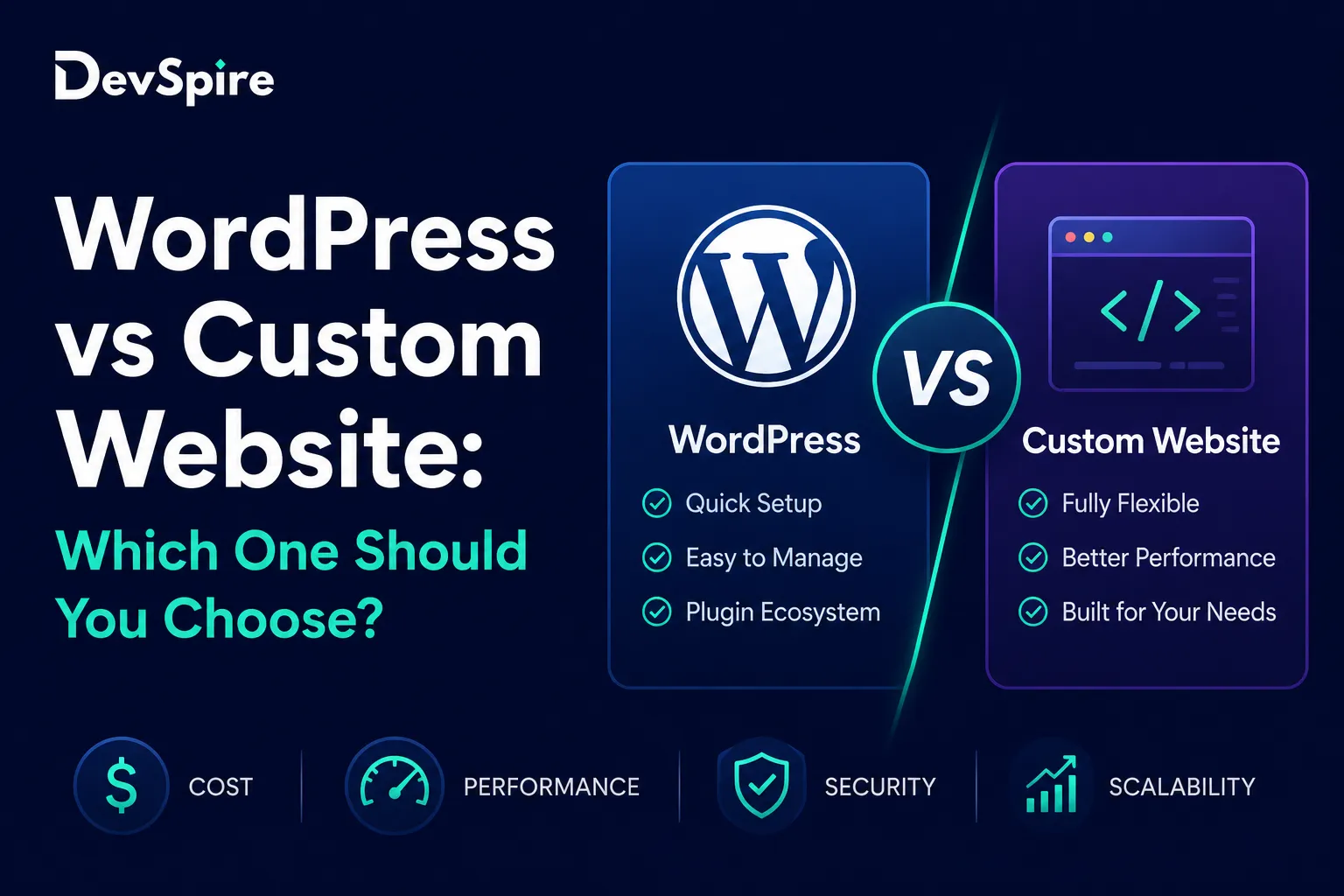

Most business owners aren’t picking between a “good” website builder and a “bad” one. They’re picking between two very different tradeoffs: launch fast and spend less now, or invest more upfront and build something made to last. That choice usually comes down to Elementor or custom theme development, and the right answer depends less on which tool is “better” and more on where your business stands right now.
Many small businesses start their search for a WordPress development company after hitting a wall with one option or the other, either a page builder that’s grown slow and hard to manage, or a custom project that feels like overkill for where they are today. Neither situation means you made the wrong choice earlier. It usually just means your business has changed since you built the site.
This post breaks down what Elementor and custom theme development actually are, what each one costs, how they perform over time, and which one fits which type of business right now.
What Is Elementor?
Elementor is a drag-and-drop tool for building WordPress pages. It lets you build and edit pages without writing any code. Elementor works on top of a WordPress theme. It doesn’t replace the theme, it adds a visual editing layer over it.
What Is Custom Theme Development?
Custom theme development means building a WordPress theme from scratch, or making major changes to an existing one, around your specific business, brand, and features. It requires a developer rather than a drag-and-drop tool, and it doesn’t depend on a page builder plugin to work.
5 Critical Facts: Elementor vs Custom Theme Development
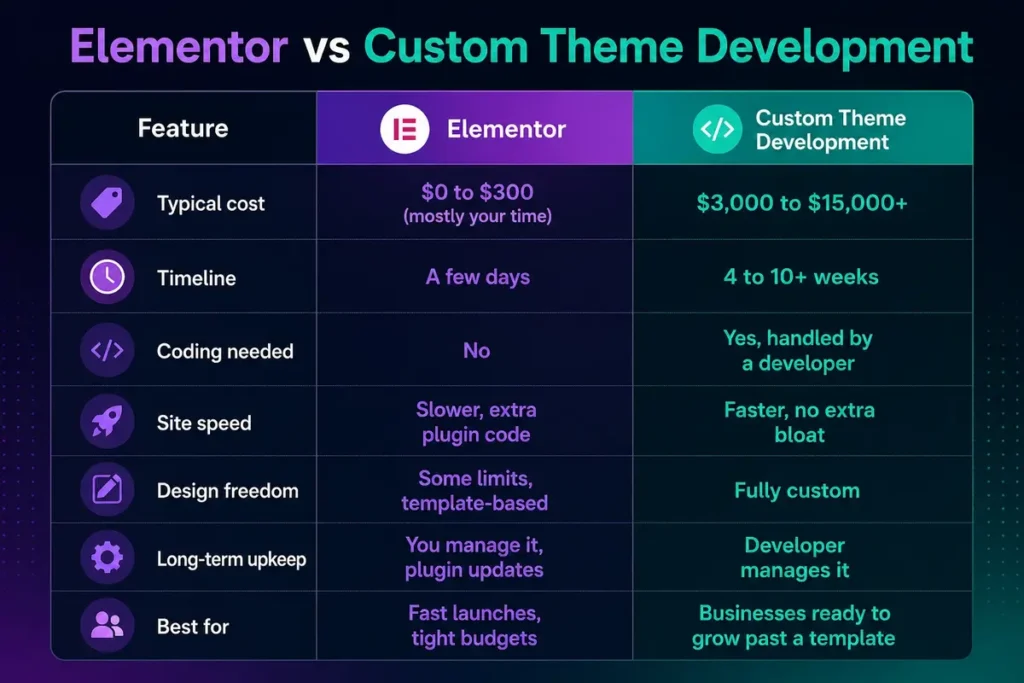
Before the full comparison table, here are the five facts that matter most when you’re deciding between the two:
- Cost: Elementor typically runs $0 to $300, while custom theme development runs $3,000 to $15,000 or more.
- Timeline: Elementor sites can launch in a few days. Custom builds usually take 4 to 10+ weeks.
- Skill required: Elementor needs no coding. Custom development needs an ongoing relationship with a developer.
- Performance over time: Elementor sites tend to slow down as more sections and plugins get added. Custom builds stay leaner because there’s no extra plugin weight.
- Long-term fit: Elementor suits fast launches and tight budgets. Custom development suits businesses that are ready to scale past a template.
The table below breaks these five points down in more detail, along with a few other factors worth knowing.
When Elementor Works Well
- Launching a simple business site fast
- Marketing teams that want to edit pages without waiting on a developer
- Testing a new idea before spending more on a bigger build
- A budget under $1,000 for the first version of the site
If any of these match your situation, Elementor is usually the right starting point. It gets you online quickly, and it’s easy to make small changes yourself as you go.
When Elementor Starts to Struggle
We’ve moved a number of clients off Elementor once their site outgrew it, and the same few problems tend to show up every time.
- Pages load slower as more sections and widgets get added over time
- Sites start to look like every other Elementor template unless real design time goes into them
- Bigger features, like custom booking tools or advanced product filtering, run into the tool’s limits
- Core Web Vitals scores often drop, which can hurt both SEO rankings and ad performance
If your site is already showing some of these signs, it’s worth reading up on why your WordPress site might be running slow before deciding what to do next. Speed problems don’t always mean you need a full rebuild, but they’re worth diagnosing properly first.
Where Custom Theme Development Wins
- Full control over the code, with no extra weight from unused plugin features
- Built around your business’s actual goals and brand, not a generic template
- Better long-term speed, especially on mobile devices
- No risk of a plugin update suddenly breaking your site’s design
Custom development costs more and takes longer, but you’re paying for a site that’s built to handle growth instead of one that needs constant patching.
What Actually Drives the Price on Either Option
A few factors push the cost up or down no matter which route you take:
- How many unique page templates or layouts your site needs
- Whether you’re adding an online store, booking system, or membership area
- How much existing content needs to be migrated over
- Whether you hire an agency, a freelancer, or handle setup yourself
- How much custom functionality your business genuinely needs versus what you think you might need someday
A simple five-page business site rarely needs a full custom build. A site running a store, a membership program, and a content library usually outgrows Elementor faster than expected.
The Real Tradeoff: Fast Launch vs Room to Grow
Elementor gets a site online fast. Custom theme development gets a site ready to grow. Neither one is the wrong choice in general, it depends on where your business is today.
A brand-new business testing an idea usually doesn’t need a $10,000 custom build yet. A business that’s outgrown its template, and is losing time and money to a slow, hard-to-manage site, usually isn’t well served by another quick Elementor fix.
Questions to Ask Before You Choose
- Do I need this site live in the next two weeks, or can I plan for six to ten?
- Will my team be editing pages themselves, or will a developer handle that?
- Is page speed a big part of my SEO strategy?
- Am I planning to add bigger features, like booking or membership tools, in the next year?
Your answers to these four questions will usually point you toward one option pretty clearly.
Which One Is Right for Your Business
Choose Elementor if speed to launch and a tight budget matter most right now. Choose custom theme development if performance, brand differentiation, and long-term growth matter more than getting online fast.
If you already have an Elementor site that’s starting to slow you down, you don’t necessarily need a full rebuild. Many businesses get real results from a scoped WordPress theme customization project that improves speed, structure, and design without starting over completely. A scoped quote is usually the fastest way to find out which path actually fits your budget and your goals.